Parliamentary Ocean Evening discusses ways to achieve the ‘Ocean Act’
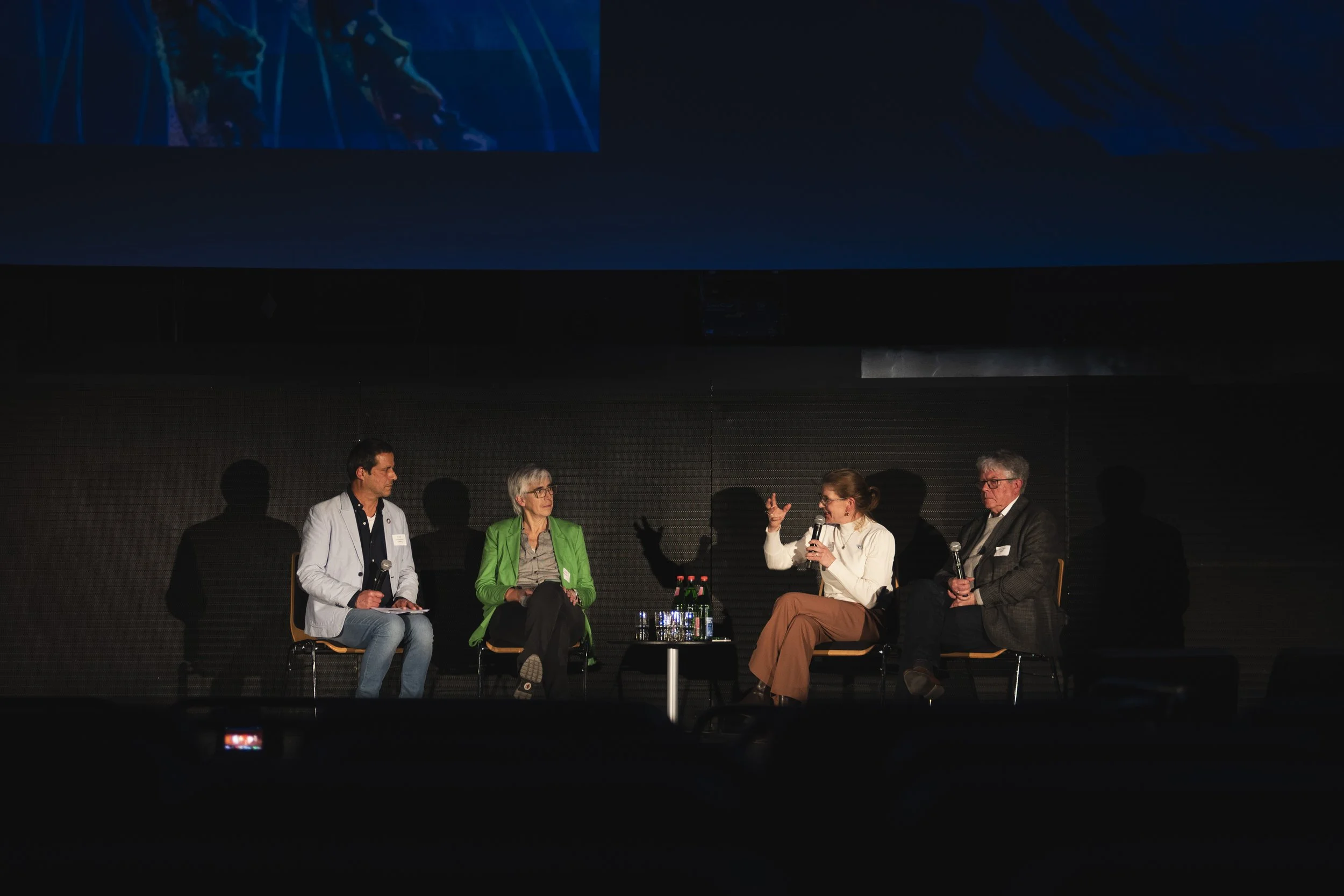
The European Union has a historic opportunity to realise a shared, forward-looking vision for our largest habitat, the ocean. This was the central theme of the German Ocean Foundation's Parliamentary Ocean Evening at the Zeiss Großplanetarium in Berlin on 9 December.
The European Ocean Pact is a strategy developed by the European Commission that brings previously widespread initiatives in the fields of environment, economy, security and research under one umbrella. But how can Germany implement the Ocean Pact in concrete terms politically, scientifically, economically and socially? How can the ‘Ocean Pact’ become an ‘Ocean Act’?
High-profile speakers addressed this question in inspiring keynotes and a lively panel discussion. Carsten Träger, Parliamentary State Secretary at the Federal Ministry for the Environment, called for action in his speech:
"With the EU Ocean Pact, we want to initiate a trend reversal. The oceans should be better protected, the sustainable blue economy promoted, and the prosperity and security of people in coastal areas supported. In addition, research and knowledge about the oceans will be promoted through the proposal for an ambitious EU marine observation initiative."
MEP Jutta Paulus also made a clear statement: Germany must develop its own political vision for the Ocean Act. It is also crucial to ensure its implementation.
“Our oceans need help! To achieve this, existing rules must finally be enforced instead of watered down. The Ocean Act must ensure that progress is measurable, with binding interim targets and regular monitoring.”
Catherine Chabaud, French Minister for the Sea and Fisheries, emphasised the importance of the ocean for the people of Europe and announced the creation of a group of ‘Friends of the Ocean’ in the European Council to actively support the implementation of the ‘Ocean Pact’ to the ‘Ocean Act’. Frank Schweikert, Director of the German Ocean Foundation, called on German politicians to launch a national Ocean Act initiative without delay.
During the event, the speakers highlighted the complexity of the European Ocean Pact and its significance for numerous areas of life. For Petros Michelidakis, Director of boot Düsseldorf, sustainable competitiveness today means understanding ecological responsibility as a driver of innovation. He summed it up: “The European Ocean Pact is more than a political document, it is a call to action. And – it calls on all of us to take responsibility.”
The subsequent panel discussion also made it clear that implementing the Ocean Act is a task for society as a whole. The participants – Jutta Paulus, Angela Schultz-Zehden (Managing Director of SUBMARINER) and Dr Ludger Weß (Co-Founder and Managing Partner at akampion and co-founder of 350PPM Biotech) – agreed that Germany should not be afraid to promote innovation and that it is crucial to encourage networking birnging both economic actors and politicians together.