Research at sea competition
Endorsed as a UN Ocean Decade Activity
Research at Sea Competition 2027
Teams of 2-4 school students from the 9th Grade and above can submit their applications for the Research at Sea competition now.
Send in your application with the registration form and research proposal to meereswettbewerb@meeresstiftung.de before 31.03.2027.
The German Ocean Foundation invites students from the 9th grade and above to take part in the "Research at Sea" competition, in which young researchers can carry out their projects on a real research vessel. Since 2005, the competition has been the largest and most attractive young talent initiative for the ocean in Germany. The competition was recognized as an endorsed activity of the UN Decade of Ocean Science for Sustainable Development (2021-2030) in 2021 and has since run under the Decade's motto "the science we need, for the ocean we want".
In the multi-award-winning marine competition, teams of students apply with their own research ideas for a one-week expedition in the summer in the North or Baltic Sea. We are constantly looking for new ideas that have not yet gained traction in everyday marine science or for innovative solutions to existing problems. The fact that around 90% of the ocean is still unknown to us is our motivation to get young people involved in marine science from an early stage.
Climate change, marine pollution and the impact of overfishing and noise pose major challenges for the ocean. Science, society and politics must quickly find answers to how the global community can comply with the 17 Sustainable Development Goals (SDGs) that were established in 2015. Building on SDG 14 "Life below water", which is closely linked to SDG 13 "Climate action", the UN Decade of Ocean Science for Sustainable Development aims to provide a scientific basis and recommendations for action to implement the UN's ocean-related Sustainable Development Goals. We are therefore calling on students to explicitly address issues that are related to the 17 Sustainable Development Goals and the 7 outcomes of the UN Decade of Ocean Science that have not yet been sufficiently researched.
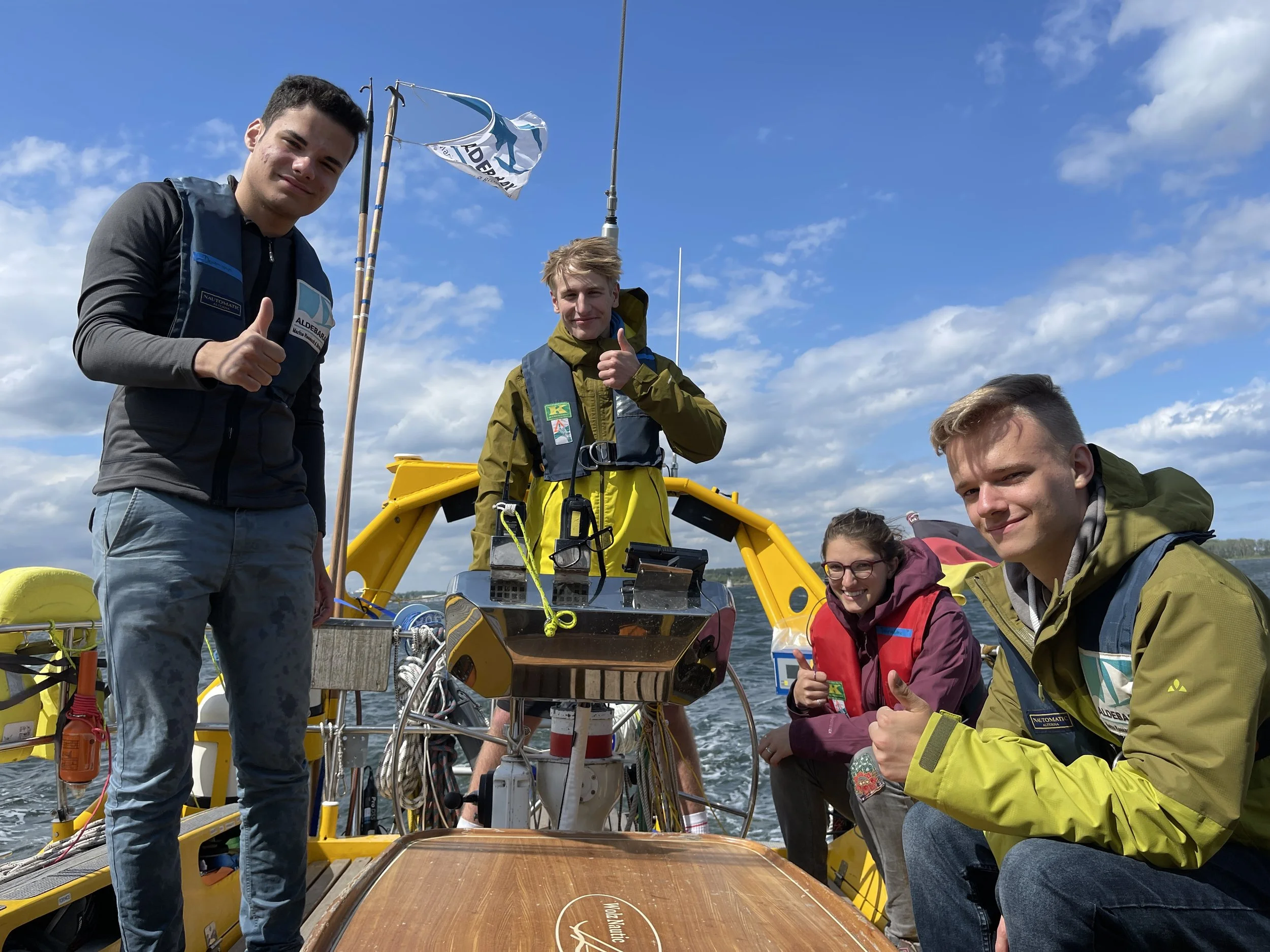
A renowned jury from the world of science select the most innovative and feasible ideas, which are then implemented on board the research vessel ALDEBARAN. The teams that convince our jury with their research ideas can take samples, experiment and analyze them on board the ALDEBARAN for a week. Each team is supported by a marine biologist and mentor who help them develop a realistic research expedition from the project outline. The mentors accompany the teams on their research expeditions and help them analyze their data afterwards. The teams also receive media support during the research expeditions so that interest and enthusiasm for marine research topics can be aroused and strengthened in schools, the media and social networks.
Research at Sea Teams 2026
Team 1: The oxygen-depleted Baltic Sea: Are ‘dead zones’ becoming greenhouse gas factories?
Carl-von-Ossietzky-Gymnasium, Bremerhaven
Research expedition from 5 to 9 July 2026 in the Bay of Lübeck
Research mentors: Dr Mona Norbisrath and Clara Taetz
Team 2: Dead zones in the Baltic Sea: Has all life really disappeared?
Gymnasium Lerchenfeld, Hamburg
Research expedition from 12 to 16 July 2026 in Eckernförde Bay
Science mentors: Lisa Schüler and Clara Taetz
Supported by the Hamburg Student Research Centre (SFZ)
Team 3: Invisible greenhouse gas beneath the water’s surface: methane in the Baltic Sea
Struensee Gymnasium
Research expedition from 19 to 22 July 2026 in Eckernförde Bay
Scientific mentor: Dr Mona Norbisrath
Team 4: Rough surfaces, more life? Invisible microorganisms in the Baltic Sea
Königin-Katharina-Stift-Gymnasium, Stuttgart
Research expedition from 16 to 21 August 2026 in the Bay of Lübeck
Science mentor: Laura Pareigis
Information about the competition teams of recent years can be found here.
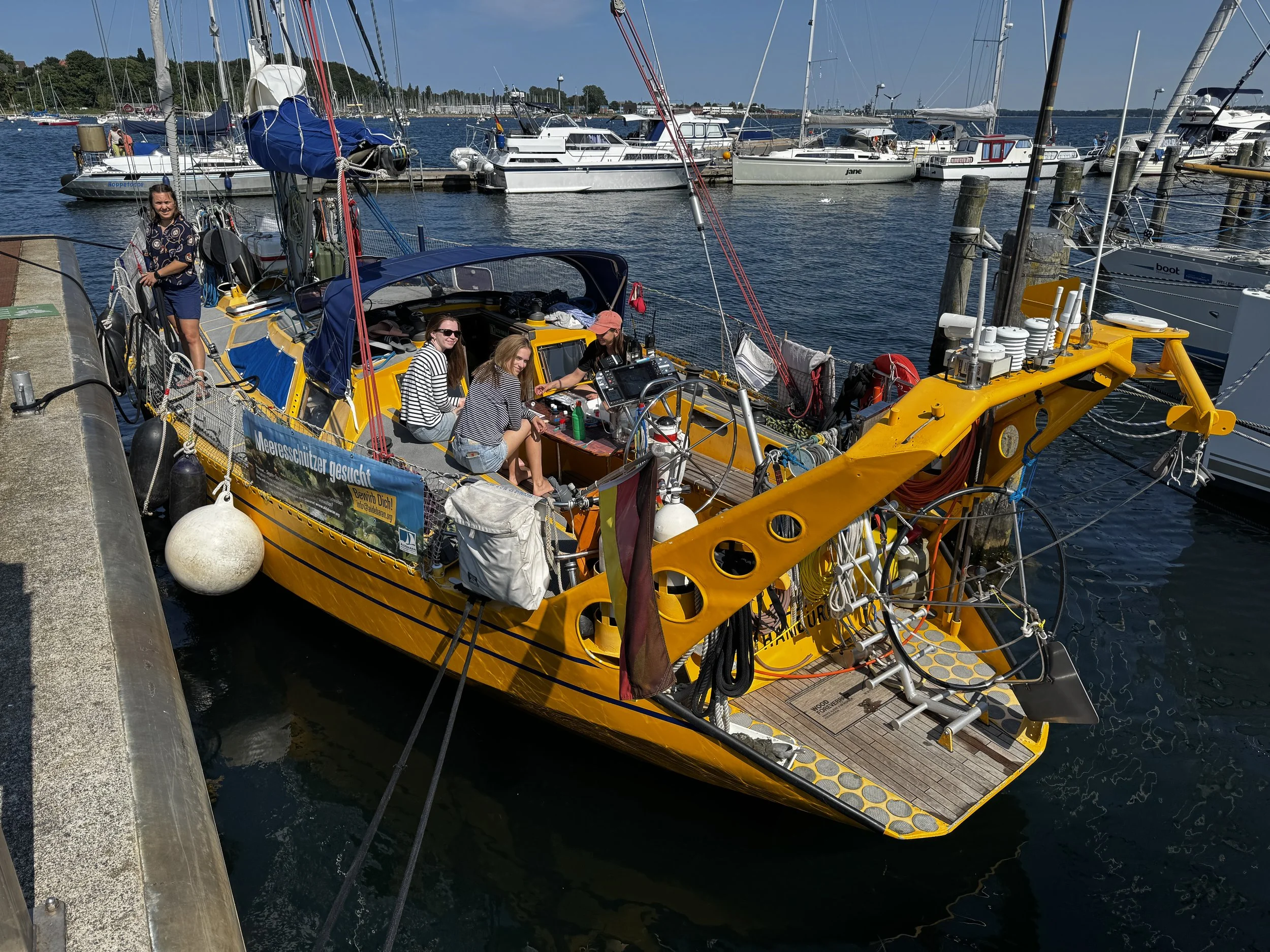
Research on the ALDEBARAN
-

ALDEBARAN
The climate-friendly, flexible research and media ship ALDEBARAN has been successfully serving our ocean since 1992, especially in shallow water and coastal areas. More than 450 expeditions worldwide bridge the gap between the ocean, science and society.
-

Ambassador for the UN Ocean Decade
The ALDEBARAN has been endorsed by the Intergovernmental Oceanographic Commission (IOC) of UNESCO as an official activity of the UN Decade of Ocean Science for Sustainable Development.
-

Underwater cameras and drones
Watching the underwater world with our high-resolution underwater cameras and underwater drones is the highlight of the research expedition on the ALDEBARAN. Even experienced scientists often can't be tempted away from the screens when the seabed, flora and fauna are on show. Research dives to carry out targeted sampling can also be launched from a floating diving base on board the ALDEBARAN.
-

Laboratory
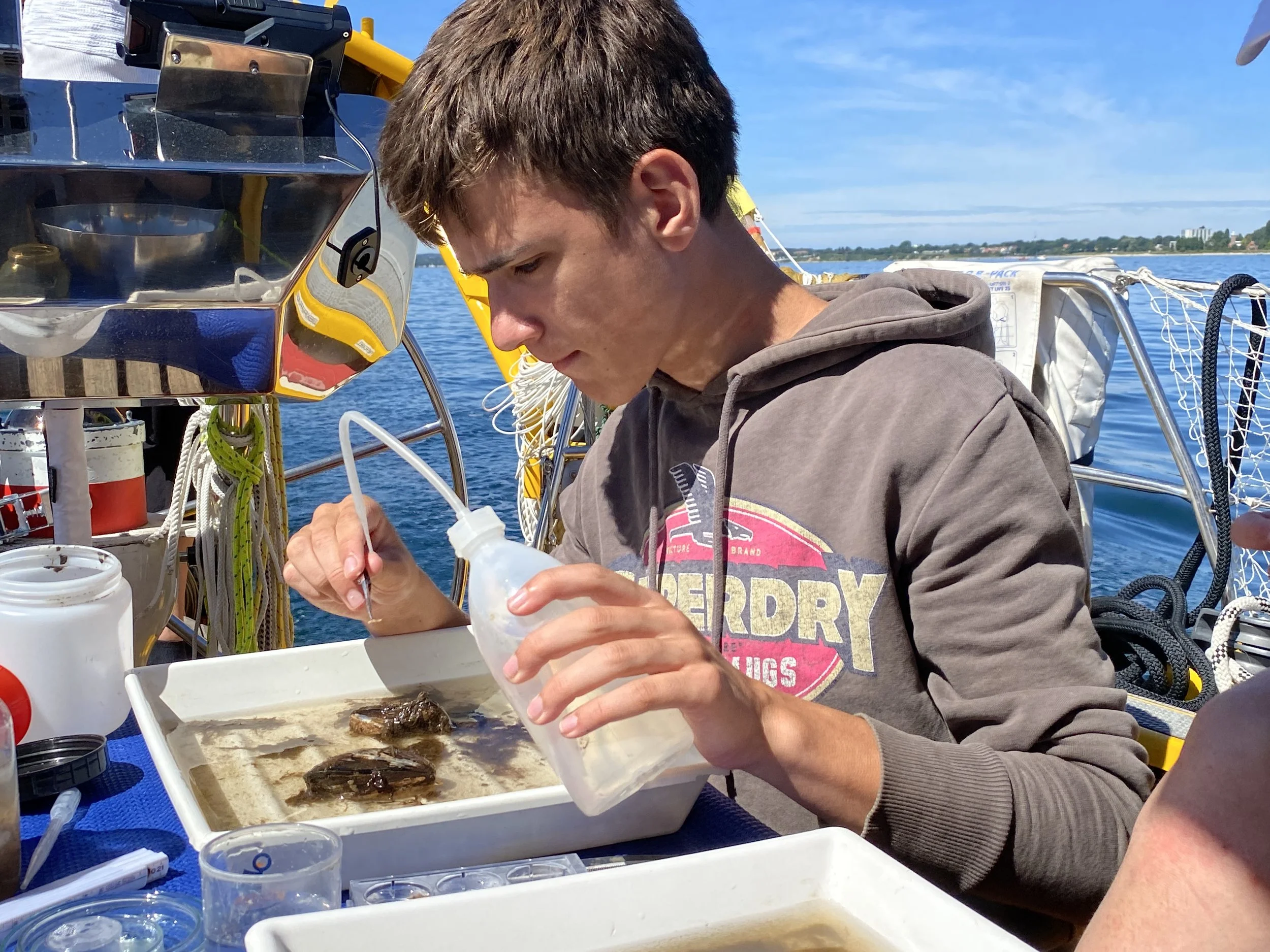
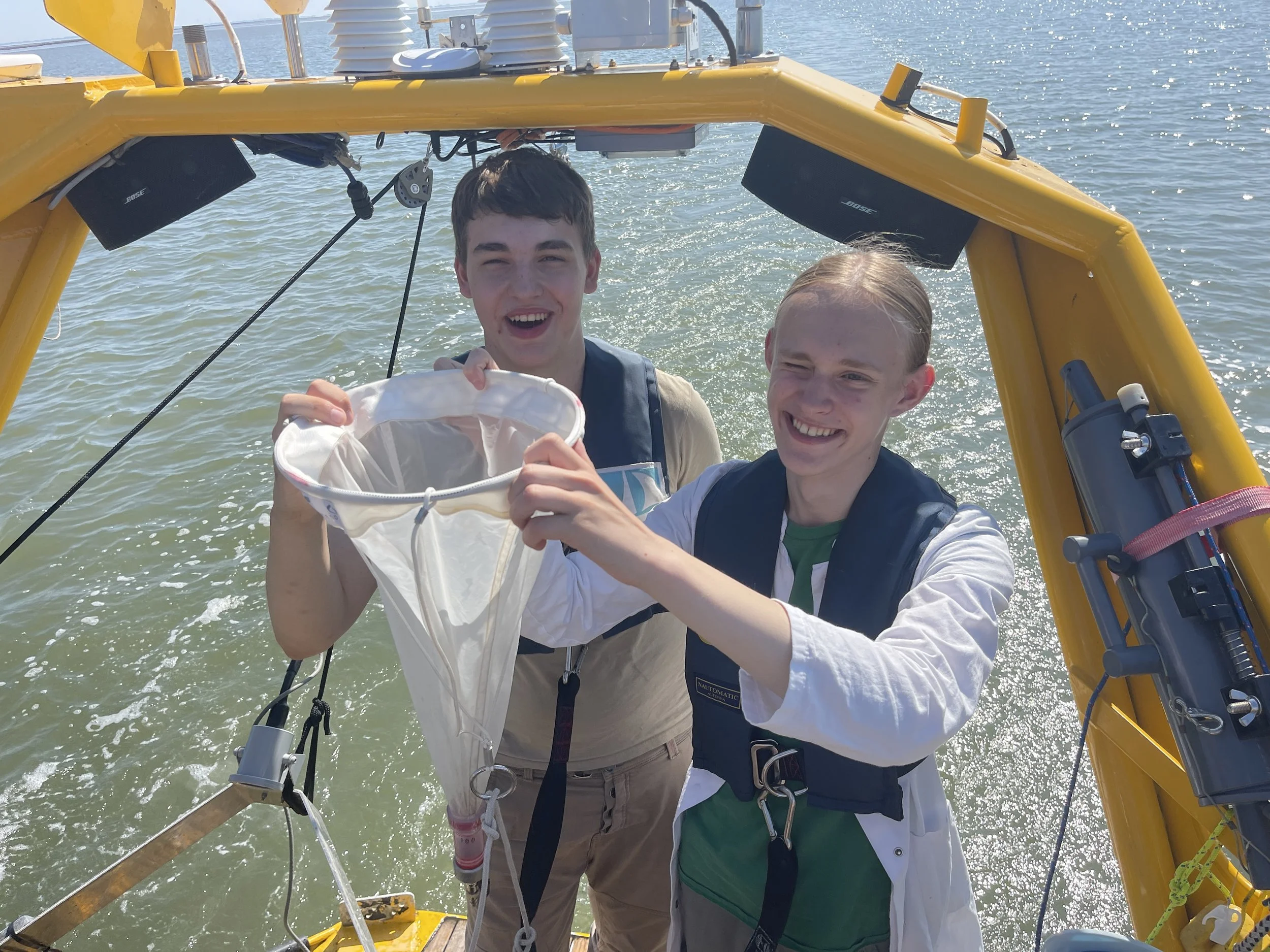
The laboratory on board the ALDEBARAN is highly professional and equipped with state-of-the-art equipment. With high-resolution microscopes and binoculars you can go on a voyage of discovery into the microcosm of marine ecosystems. A multi-parameter probe can be used to measure oxygen concentration, temperature and salt content, the nutrient composition of the water samples can also be determined using a photometer. Samples can also be taken with a soil grab and plankton net.


Further details about the ALDEBARAN and the extensive equipment on board for your research project can be found here.
The scientific jury
-

Prof. em. Dr. Hartmut Graßl
Chairman of the Association of German Scientists (Vereinigung Deutscher Wissenschaftler e.V.) and former director of the Max Planck Institute for Meteorology in Hamburg. From the early to mid-1990s, he was also a member of the German Bundestag's Enquête Commissions on “Precautionary Measures to Protect the Earth's Atmosphere” and “Protection of the Earth's Atmosphere” and served as director of the World Climate Research Program for many years.
-

Prof. Dr. Dieter Hanelt
Deputy Director of the Biozentrum Klein Flottbek (Head of Cell Physiology) and Botanical Garden, University of Hamburg. His research focuses on the ecology of aquatic plants, plant stress physiology, and marine botany.
-

Deniz Vural
PhD candidate at the Alfred Wegener Institute for Polar and Marine Research in Potsdam. Her research focuses on the changing dynamics of permafrost coasts, particularly in the western Canadian Arctic. As a climate-conscious citizen, Deniz has been involved in various NGOs over the past 14 years. She is currently a member of the Executive Committee of the Association of Polar Early Career Scientists (APECS), a board member of the Environmental Sustainability Rotary Action Group (ESRAG), and a council member of Polar Educators International (PEI).
-

Dr. Georg Heiss
Currently working at Freie Universität Berlin. He has also worked as a member of the German Advisory Council on Global Change (WBGU) and at the Museum of Natural History (Leibniz Institute for Evolution and Biodiversity Research) at Humboldt University in Berlin.
-

Dr. Andreas Schmidt-Rhaesa
Curator for invertebrates at the Zoological Museum of the University of Hamburg. He is involved in various projects dealing with, among other things, meiofauna animals in the Caribbean and South Korea.
-

Dr. Lena Rönn
Marine biologist at the Lower Saxony State Agency for Water Management, Coastal Protection, and Nature Conservation (NLWKN) in Oldenburg. In her field of expertise, “plankton and nutrients,” she is committed to marine conservation in the Wadden Sea and beyond, and strives for greater cooperation between different stakeholders in marine conservation and the involvement of young people.
-
Lina Röschel
Research associate in the Ocean Governance research group at the RIFS in Potsdam since 2021. Her work focuses on the ocean-climate nexus and includes the governance of blue carbon ecosystems as marine nature-based solutions for climate protection.
What the participants say:
“I've been twice and wouldn't hesitate for a second to go again.”
Melissa Horras, participant 2024/25
"If I had the chance, I would do it again in a heartbeat."
Helena Brihmani, participant 2020
“This experience has given me a new perspective on life and our responsibility for the ocean.”
Teresa Hauser, participant 2025
"An excursion without cyanobacteria, but with unforgettable experiences."
Victoria Wright, Jan Malte Neuhaus and Jana Künne, participants 2017
"Sailing on a research vessel as a student? Sounds impossible? No, it's definitely not."
Clara Deifel, participant 2018
“The experience inspired me to engage even more intensively with the marine ecosystem.”
Theresa Unz, participant 2025
We would like to thank our sponsors in 2026: