Our Events
Upcoming Events
Ocean Decade Dialogue
Challenge 5: Unlock ocean-based solutions to climate change
6 October 2026 | 5.00 pm | Online
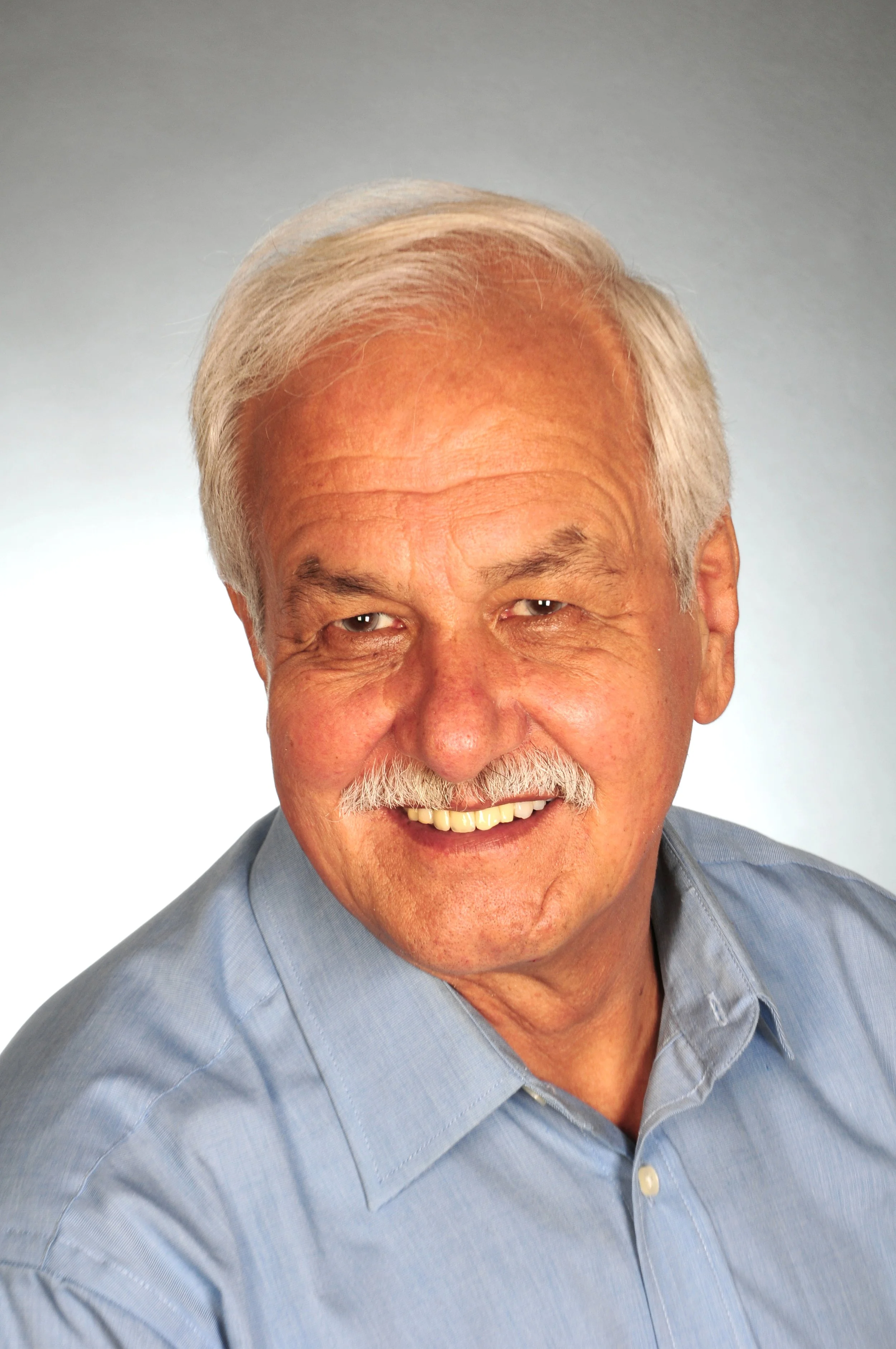
Together with Prof. Victor Smetacek, we will be addressing one of the major challenges of the UN Decade of the Ocean: How can the ocean help to halt climate change?
The online dialogue will be held in English.
A film night for the ocean
Saturday, 17 October 2026 | 6.00 pm
Cap San Diego
Überseebrücke, 20459 Hamburg
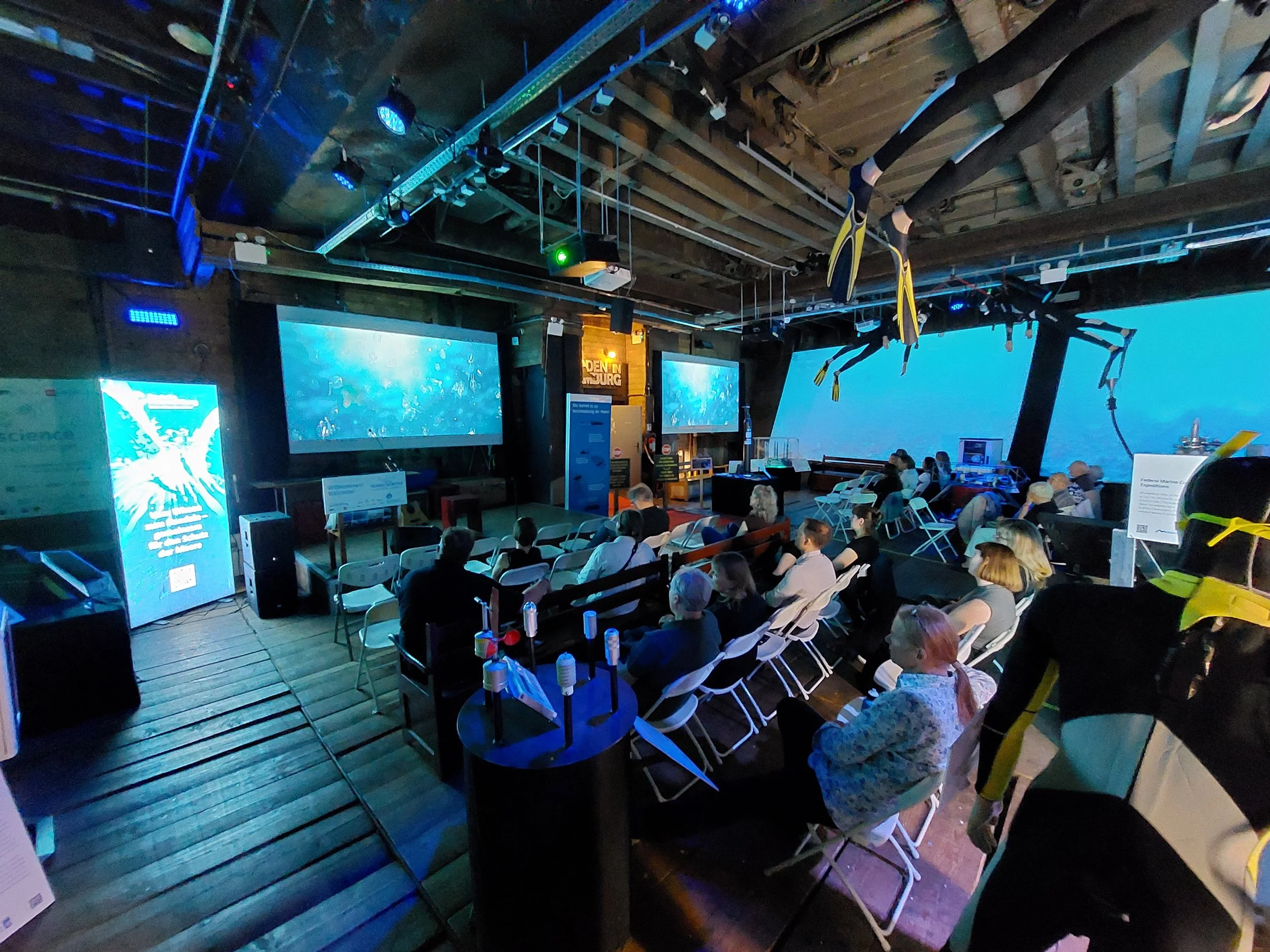
On 17 October, the Cap San Diego in Hamburg will become a stage for captivating films, music and exchange about the future of our oceans – from expeditions in the Baltic Sea to the fascinating underwater worlds of Wallacea. Under the theme ‘From Knowledge to Action’, we will then discuss how ocean farming, science and social engagement can create concrete solutions for climate protection and marine conservation.
Parliamentary Ocean Evening: What does the European Ocean Act mean for Germany?
Tuesday, 3 November 2026 | Doors open at 5.30 pm | Starts at 6.00 pm
European House at the Brandenburg Gate
Unter den Linden 78, 10117 Berlin
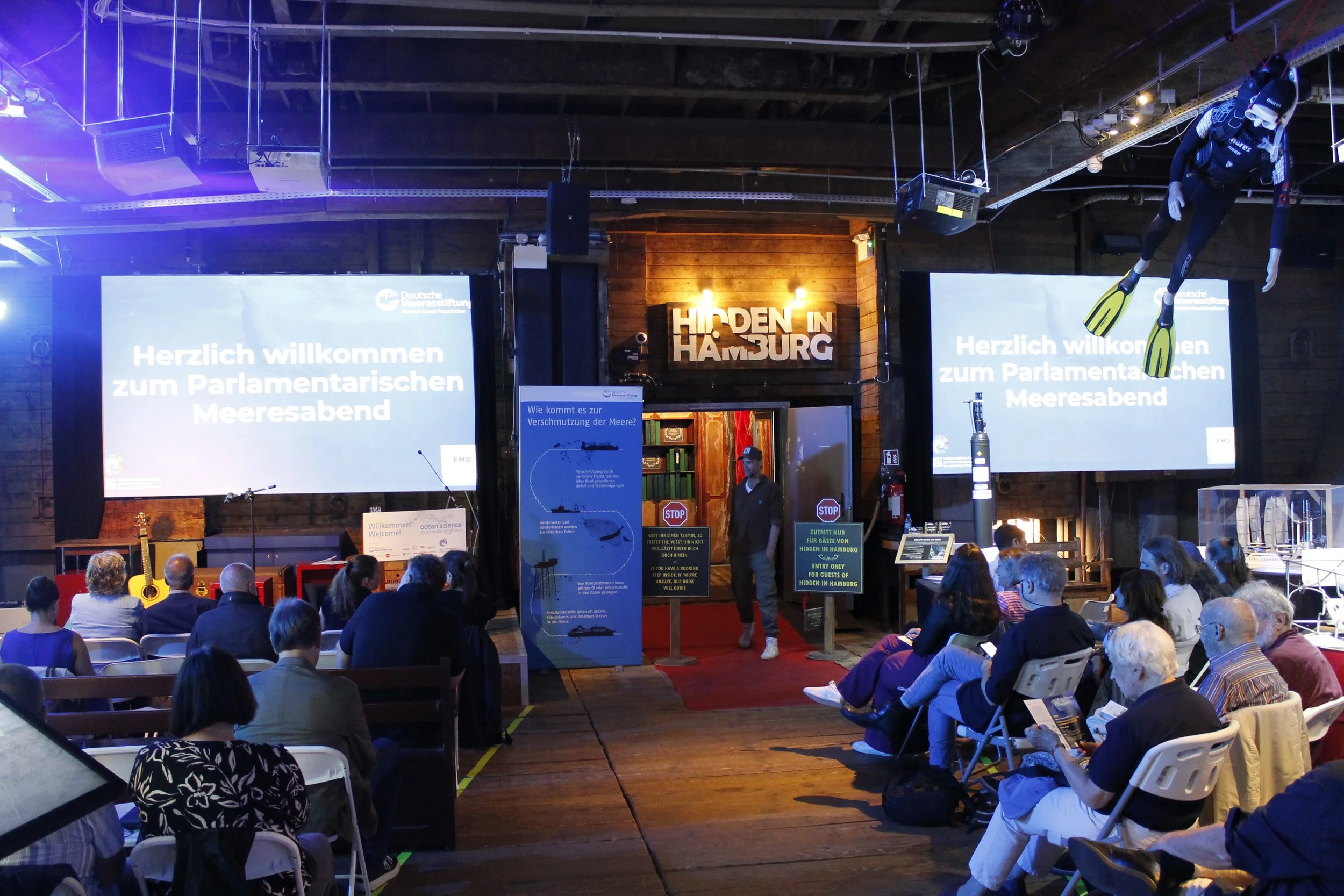
The ocean is under pressure: climate change, environmental pollution and the growing competition for marine spaces and resources call for a joint and forward-looking maritime policy. The European Ocean Act offers an opportunity to enshrine the protection and sustainable use of the oceans more firmly and bindingly across Europe. But what does this mean in concrete terms for Germany? What impetus will it provide for politics, business and research? And how can European objectives be translated into concrete national measures?
We will be discussing this at the next Parliamentary Ocean Evening organised by the German Ocean Foundation at the European House in Berlin – together with representatives from politics, science, business and civil society.
Past Events
9th Sea Experience Days: Ten days of hands-on Baltic Sea experiences
From 14 to 23 August 2026, the Niendorf Fishing Harbour will once again be transformed into a vibrant learning and discovery hub for sustainable marine education. The Sea Experience Days are now in their ninth year – offering families, holidaymakers and those interested in the sea a rare opportunity to experience the Baltic Sea up close and learn more about protecting this unique habitat.
Especially in summer, when many people have time to engage with environmental and nature-related topics, the Sea Experience Days send a strong message. The event invites visitors not only to enjoy the Baltic Sea, but to actively explore it and gain a better understanding of why it is under threat.
Research for everyone: BeachLabs and SailingLabs
A highlight is the BeachLabs: guided beach walks turn the whole family into marine researchers. Afterwards, beach finds are examined under a microscope and in aquariums – a low-threshold yet scientifically sound insight into the diversity of the Baltic Sea.
The SailingLabs on board the research vessel ALDEBARAN are also a major crowd-puller. Here, children learn the basics of scientific work at sea, carry out experiments and experience the Baltic Sea from the perspective of real marine research.

Promoting the Sea: The Ocean Literacy Lab on the Cap San Diego
1 July 2026 is all about ocean literacy. At the German Ocean Foundation’s first Ocean Literacy Lab, the Cap San Diego in the Port of Hamburg will be transformed into an educational ambassador for the sea.
Only recently, the German Ocean Foundation became one of a total of 27 UN Ocean Decade Implementing Partners. To fulfil this role, we have committed to organising a regular, structured, and publicly accessible mechanism that supports the implementation of the Decade through knowledge transfer, dialogue, and social acceptance: born were the Ocean Literacy Labs, a biannual series of events in which we explore and engage with the ocean from various perspectives.
We look forward to seeing many of you there and to your support in giving the ocean the voice it needs and deserves.
Schedule
-
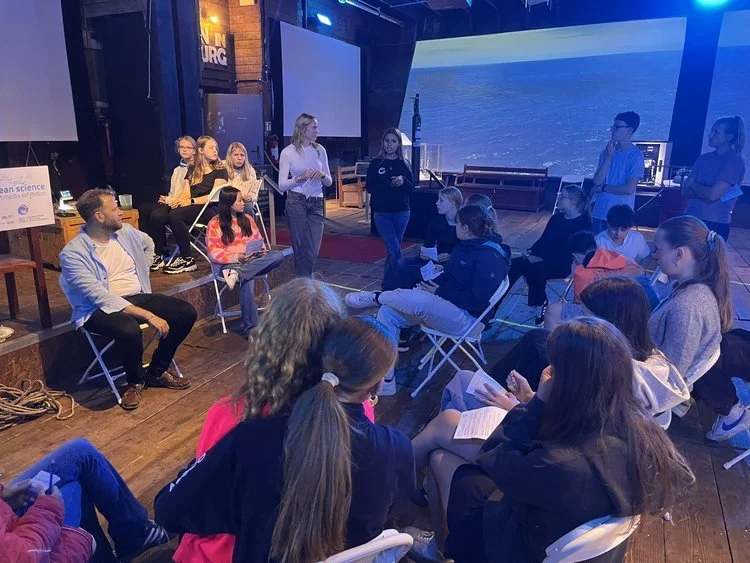
Pupils from Year 5 upwards can take part in interactive workshops and hands-on activities on board the Cap San Diego, focusing on the ocean, climate and future maritime technologies. Topics include marine pollution and microplastics, the many potential uses of algae, and the impact of bottom trawling on marine ecosystems.
Language: German
-
As part of our Ocean Awareness Day, we will be screening the film Ocean with David Attenborough against the unique backdrop of the Cap San Diego.
With breathtaking footage of coral reefs, kelp forests and the vastness of the ocean, the film highlights the importance of a healthy sea for our planet and the life it supports. The fascinating underwater world reveals not only its beauty, but also the pressing challenges it faces, such as destructive fishing methods and coral bleaching.
Language: English
-
Under the title “Greater awareness of the ocean for a future worth living”, representatives from the worlds of politics, science and civil society will discuss how knowledge about the ocean can be more effectively integrated into schools, universities and public education.
Keynote speeches by:
Prof. Dr Mojib Latif: “Why the ocean is systemically important for the climate, the economy and society”
Katja Günther: “Marine education as a political task – experiences and perspectives from Schleswig-Holstein”
Dr Wiebke Endres: “Germany’s first marine school – a model for the educational landscape of tomorrow?”
Dr Alica Torkov: “A political interjection on deep-sea mining”
This will be followed by a get-together with the speakers and representatives from politics, academia and civil society to discuss how Germany can become a nation with greater maritime awareness.
Language: German
-
Together with our companions, partners and supporters, the German Ocean Foundation looks back on eleven years of commitment to marine conservation, science communication and sustainable development. We would like to host a reception to say thank you and to provide an opportunity for people to meet and exchange ideas.
Parliamentary Ocean Evening: Greater awareness of the ocean for a future worth living
Wednesday, 1 July 2026, from 7 pm on the Cap San Diego in the port of Hamburg
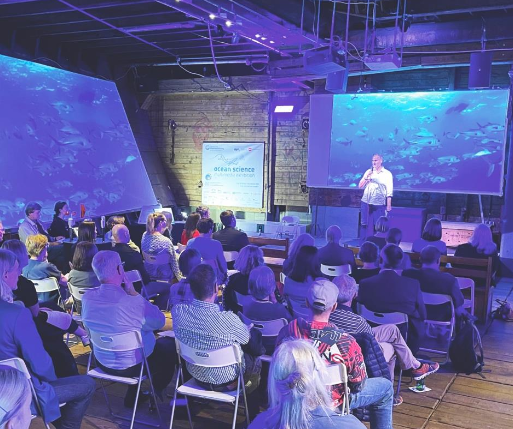
At the Parliamentary Ocean Evening, decision-makers from politics, science and business will discuss how marine awareness can be strengthened in Germany. The focus will be on:
Education for all: Integrating marine knowledge into curricula and educational strategies so that an awareness of the ocean is instilled from an early age, including in museums, planetariums and the media.
Sharing best practices: Successful examples from German federal states with maritime educational pathways that are setting a precedent.
Germany as a pioneer: Germany’s role as an international driving force for ocean education – in the spirit of the UN Ocean Decade and the European Ocean Act.
Keynote speeches by:
Prof. Dr Mojib Latif: “Why the ocean is systemically important for the climate, the economy and society”
Katja Günther: “Marine education as a political task – experiences and perspectives from Schleswig-Holstein”
Dr Wiebke Endres: “Germany’s first marine school – a model for the educational landscape of tomorrow?”
Dr Alica Torkov: “A political interjection on deep-sea mining”
This will be followed by a get-together with the speakers and representatives from politics, academia and civil society to discuss how Germany can become a nation with greater maritime awareness.
Ocean Decade Dialogue
Challenge 4: Develop a sustainable, resilient and equitable ocean economy
24 June 2026 | 5:00 pm | Online
The next Ocean Decade Dialogue will focus on UN Ocean Decade Challenge No. 4: How can we develop a sustainable, resilient and equitable ocean economy?
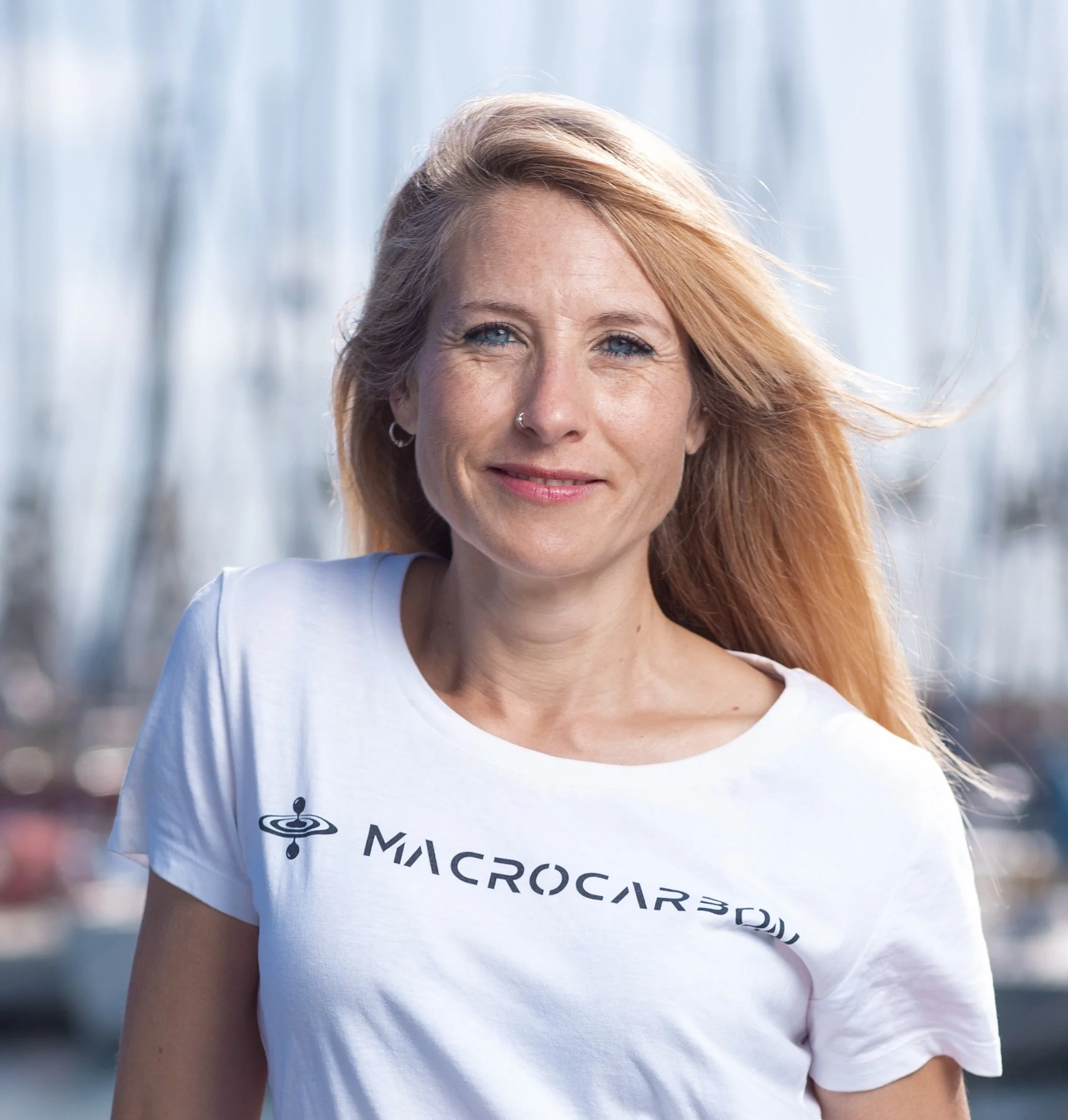
Our speaker: Beatriz Fernández-Gómez, Sustainability and Communications Lead, MacroCarbon
MacroCarbon is a Canaries-based company innovating to grow floating seaweeds at scale.
Beatriz holds a PhD in Biological Oceanography and specializes in marine ecology, with a particular focus on microalgal and macroalgal ecosystems. Throughout her scientific career, she has participated in numerous research projects investigating the impacts of climate change on the ocean and marine biodiversity. As Sustainability and Communications Lead at MacroCarbon, she oversees environmental monitoring, carbon removal MRV, sustainability reporting, stakeholder engagement, and scientific communication, ensuring the offshore seaweed cultivation activities deliver measurable environmental benefits.
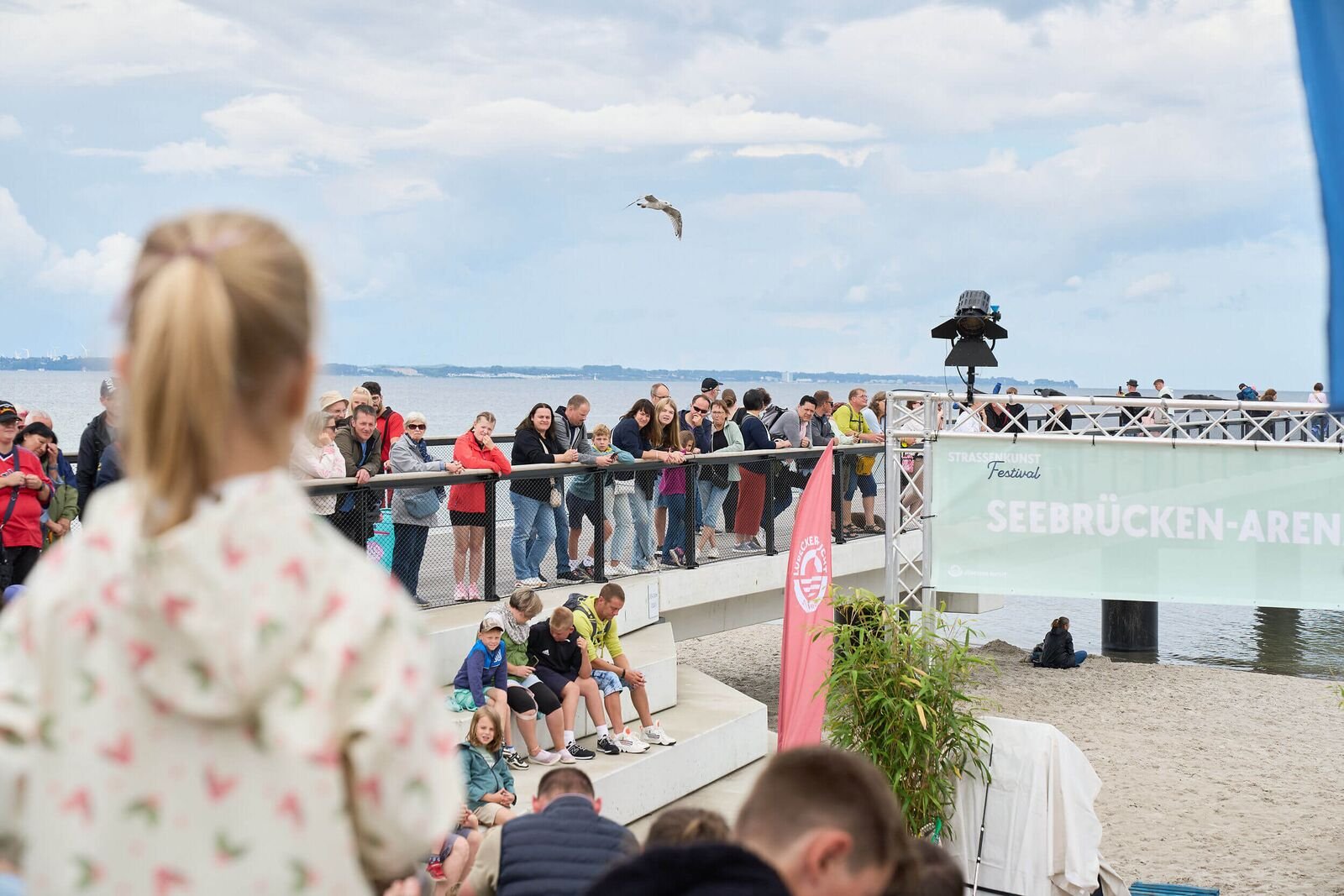
Together for the Baltic Sea: The German Ocean Foundation at the PfingsTON FESTIVAL 2026
From 22 to 25 May 2026, Scharbeutz will become a hub for music, community and marine protection: at the ‘Best of Baltic meets PfingsTON FESTIVAL’, Lübeck Bay will bring people together not only to celebrate the Baltic Sea, but also to actively protect it.
The German Ocean Foundation is part of the opening talk in the Kurparksaal. Together with representatives from politics, local government and civil society, we will discuss why joint action to protect the Baltic Sea is crucial, especially now.
At the heart of it all is a clear message: the Baltic Sea needs us all – and every step counts.
Political frameworks are important – but real change comes about through collective commitment and concrete action in everyday life.
The festival combines this message with a diverse programme of music, hands-on activities and sustainable initiatives. In addition to talks and activities centred on marine conservation, the event itself focuses on measures such as reusable packaging schemes, renewable energy and a more sustainable catering offering.
A particular focus is on motivating people and showing how easy it can be to get involved – whether through more conscious consumption, supporting initiatives or taking part in activities such as seagrass projects.
Our aim: not just to inform people, but to inspire them – so that interest turns into real action.
We look forward to the discussions on the ground and to sending a strong signal together for the protection of the Baltic Sea.
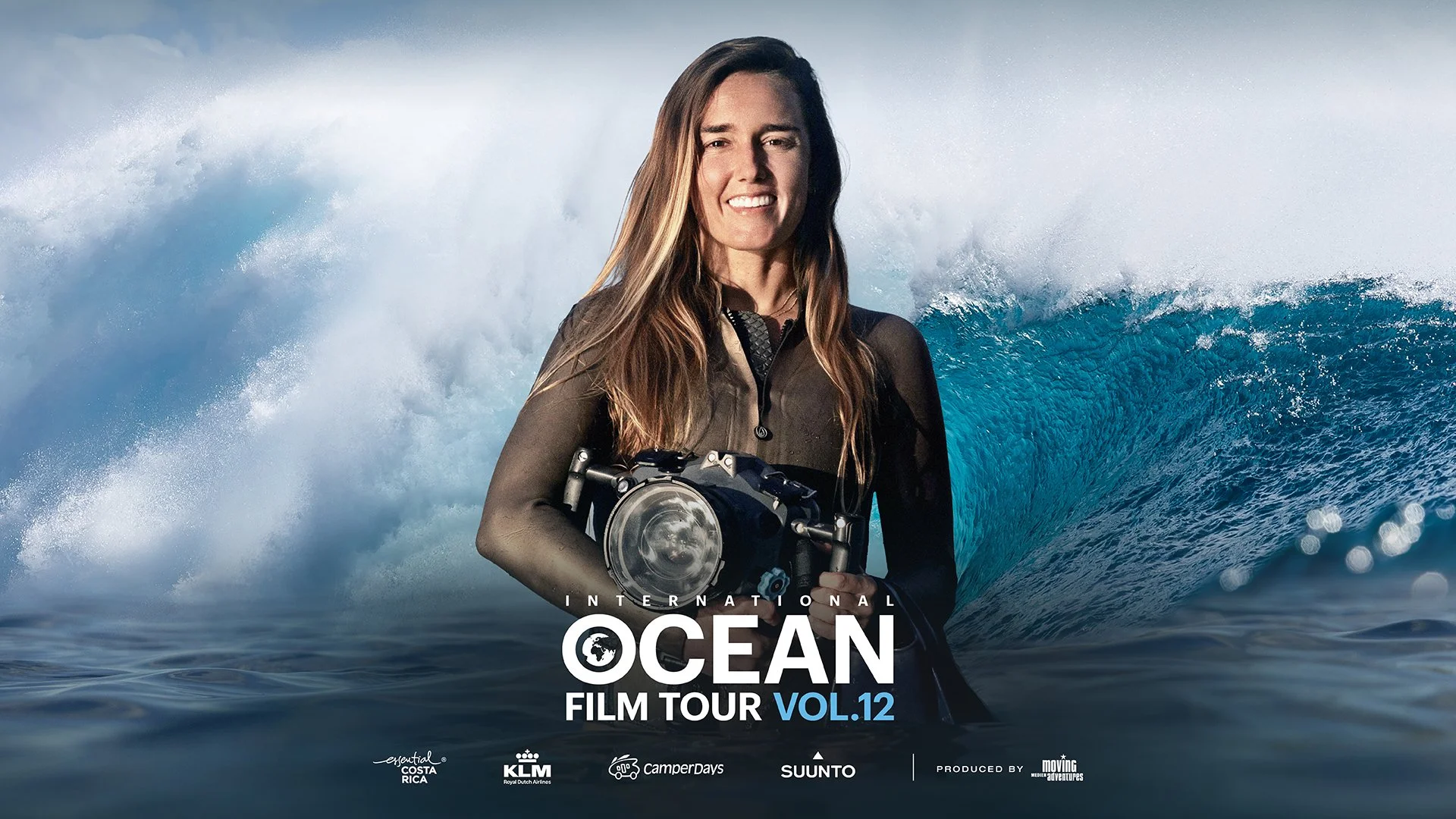
International Ocean Film Tour
The five new films in International Ocean Film Tour Volume 12 tell the stories of people who dared to embark on new journeys and embrace change. Their stories take us out onto the open sea, to rugged coastlines, and to extraordinary encounters.
We were at many film evenings to present our work, in particular the “Ocean Lovers Education” platform, which, in collaboration with the Ocean Film Tour, provides teaching materials and films from past tours for teachers.
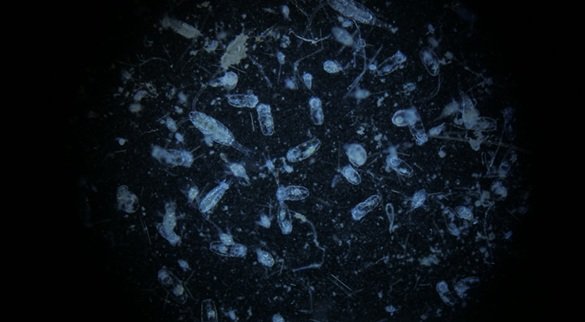
Invisible Worlds: From the Microcosm to the Universe
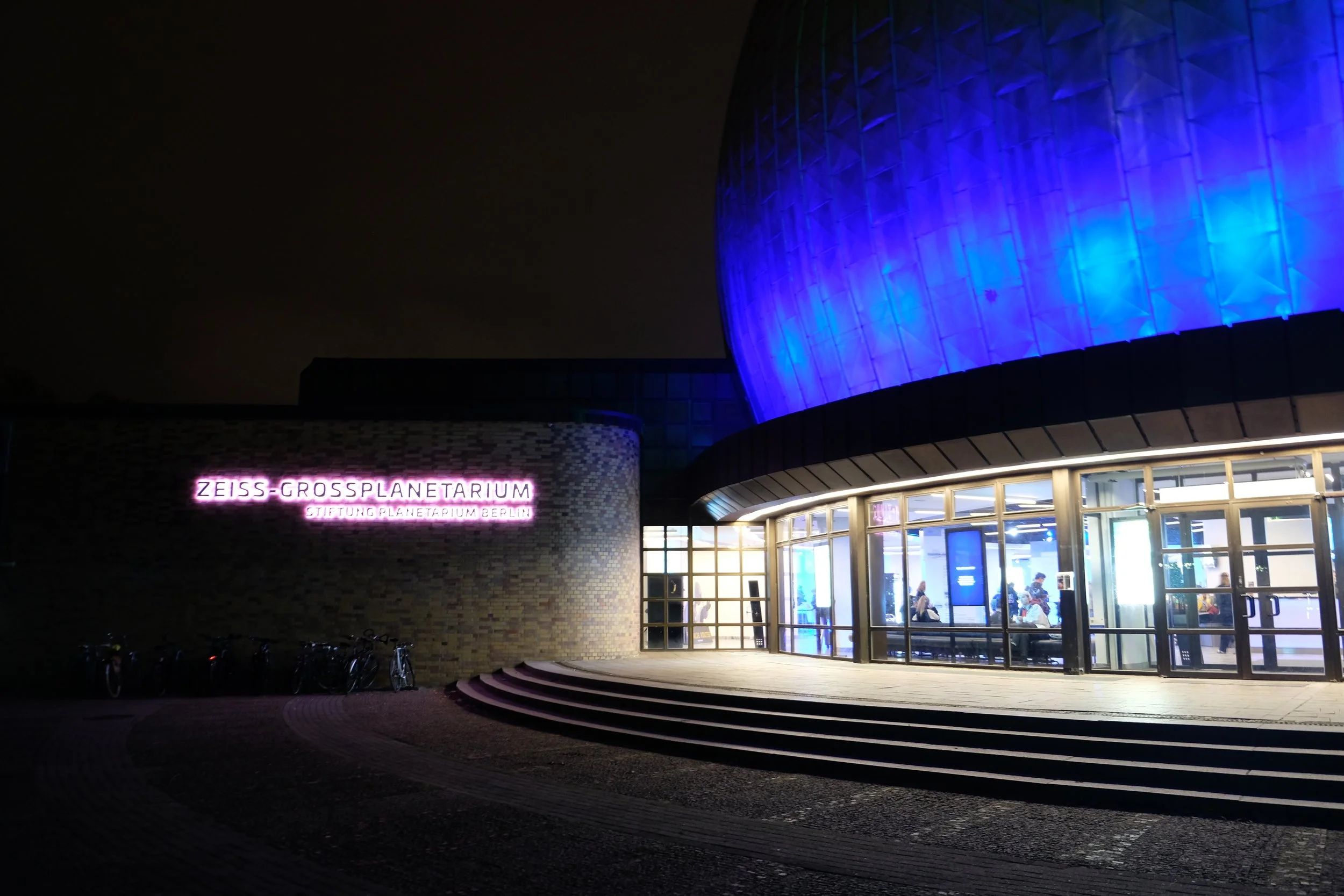
16 to 18 April 2026, Zeiss Großplanetarium Berlin
From 16 to 18 April 2026, everything at the Zeiss Großplanetarium in Berlin will revolve around the microscope, a groundbreaking invention that, like the telescope, has revolutionised our view of scientific connections. With its help, we will focus on microplastics as one of the pressing issues of our time. What do we mean by this, where is it found in the environment and in our bodies, and what consequences does it have for our society? In workshops, fulldome programmes, lectures and live performances, join us to experience an exciting journey from the microcosm of life to the infinite vastness of the universe.
The German Ocean Foundation will once again be on site with an information stand and interactive stations in the foyer.
Parliamentary Ocean Evening: Halfway through the Ocean Decade
16 April 2026, Zeiss Großplanetarium Berlin
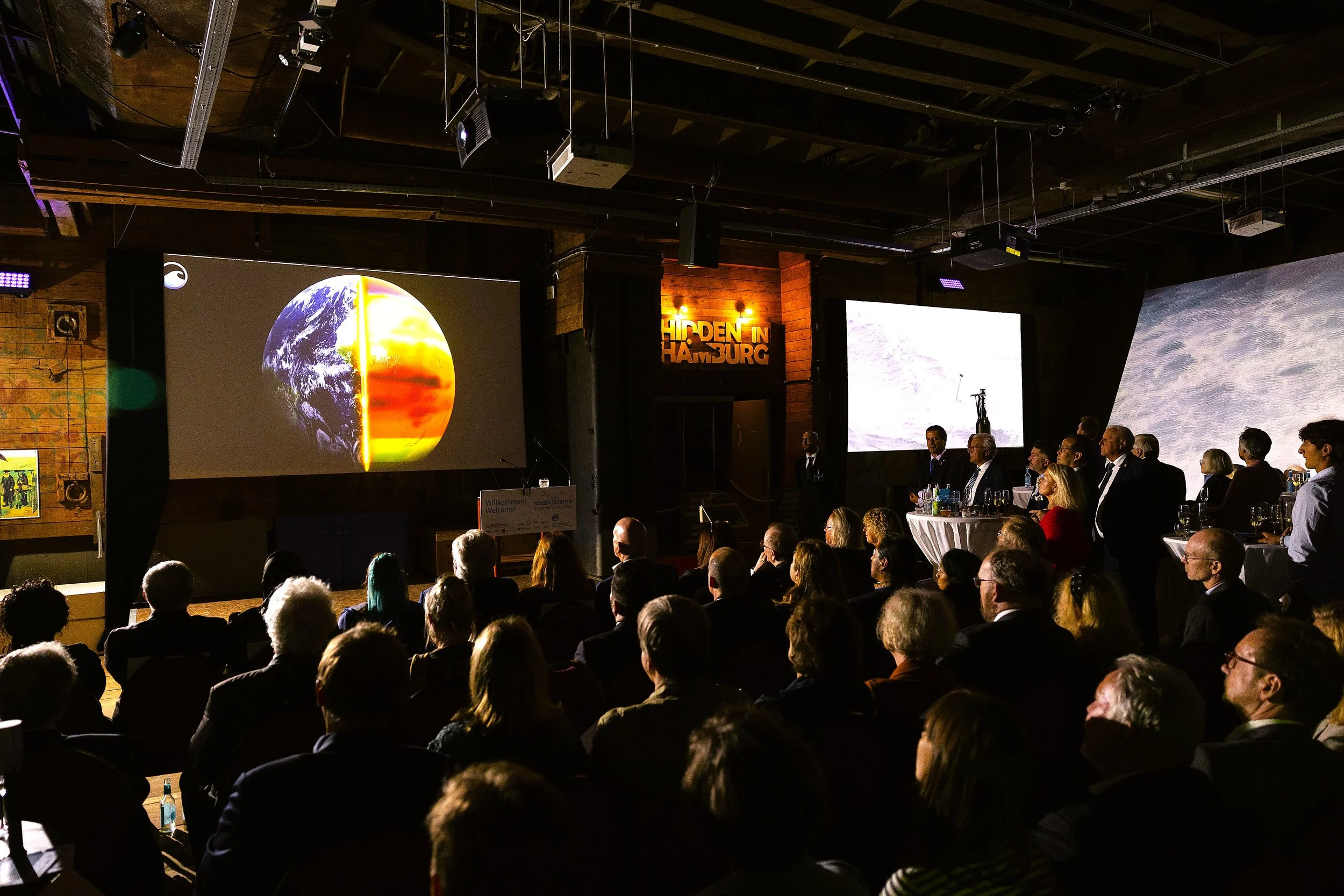
The focus of the evening was the mid-term review of the UN Decade of Ocean Science for Sustainable Development (2021–2030). Representatives from politics, science and civil society unanimously emphasised that the importance of the ocean for the climate, biodiversity, food security, the economy and global stability is still not sufficiently reflected in political action in Germany.
The event also highlighted the central role of plankton in climate regulation, fisheries and food security. At the same time, the sensitivity of this system to human intervention was emphasised and its protection was presented as a global responsibility.