
Storm halts research – yet young researchers still provide important data on oxygen-depleted waters in the Trave and on oxygen depletion zones in the Baltic Sea
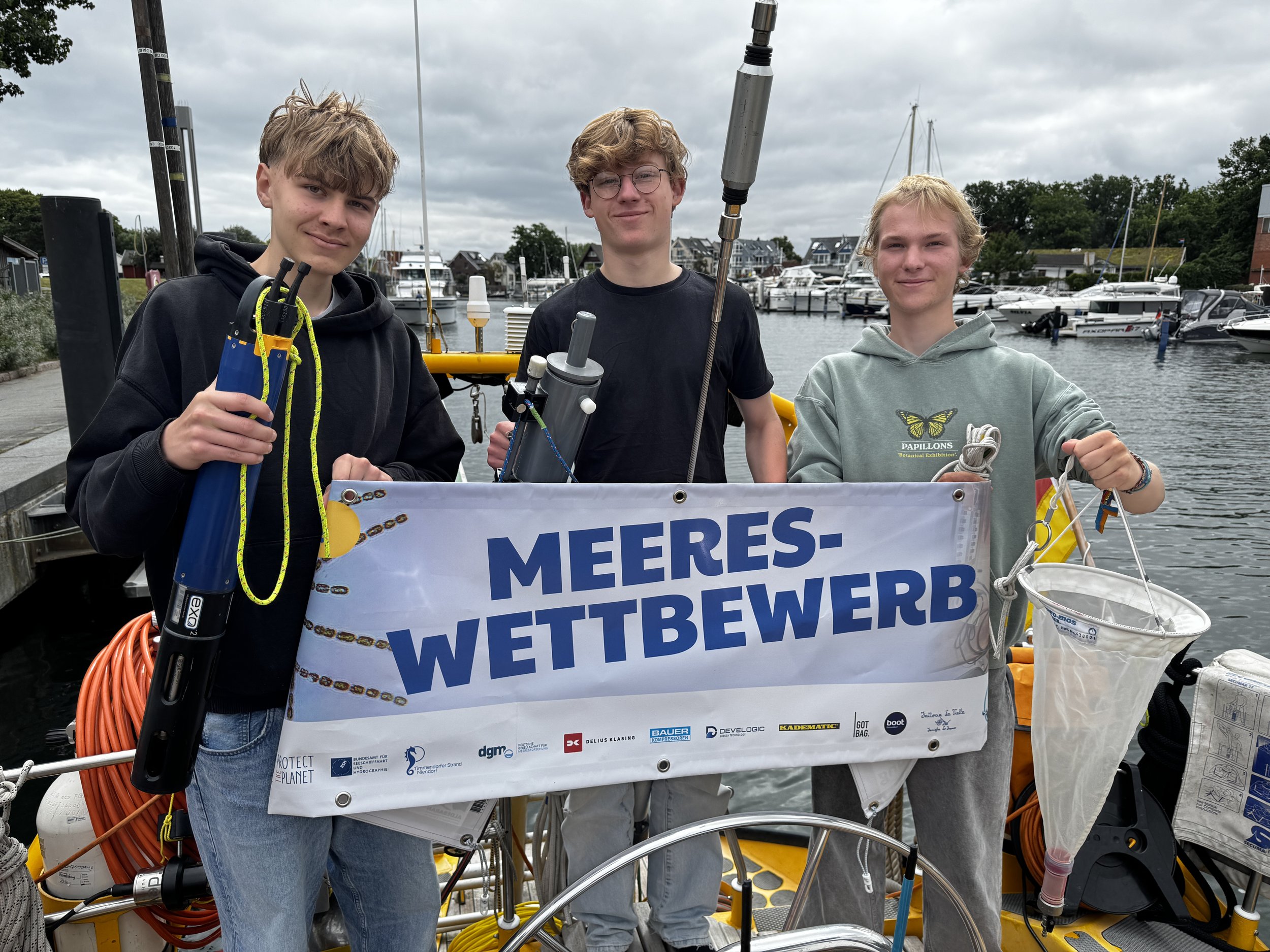
Niendorf/Baltic Sea, July 2026. Despite persistent stormy weather, the first research team from the nationwide research at sea competition has successfully completed its expedition aboard the research and media vessel ALDEBARAN. Three students from the Carl-von-Ossietzky-Gymnasium in Bremerhaven investigated whether the oxygen-depleted ‘dead zones’ of the Baltic Sea might be previously underestimated sources of climate-damaging gases such as methane and carbon dioxide.
The five-day expedition took the pupils along the River Trave, through the connecting waterways and – weather permitting – across the Baltic Sea as far as Timmendorfer Strand. The research trip concluded at Niendorf Harbour. However, due to persistent stormy weather, the planned research work on the open Baltic Sea could only be carried out on a single day. The majority of the measurements therefore had to be taken in the River Trave and its connected inland waters. Using a high-resolution underwater camera and a modern multi-probe, the young researchers documented the ecological condition of the waters under investigation and specifically searched for oxygen-depleted areas at the riverbed.
Despite the difficult conditions, valuable measurement data was collected. This data provides important insights into the ecological status of the Trave and its connected water bodies, as well as into the oxygen situation in the Baltic Sea. The data helps to improve our understanding of the formation and development of oxygen-depleted waters in the Trave and the causes of oxygen depletion in the Baltic Sea. The expedition impressively demonstrates how young people can make a tangible contribution to marine conservation through their own scientific research.
The project focused on the question of which climate-relevant gases are produced in oxygen-depleted areas of the seabed and what role they might play in climate change. In particular, the research examined methane, carbon dioxide and hydrogen sulphide – substances that can influence both the health of the Baltic Sea and global climate processes. The water samples collected during the expedition are now being analysed in collaboration with the scientific mentors. Together with the measurement data collected, they form an important basis for further scientific analysis.
The project was supported by the scientific mentors Dr Mona Norbisrath and Clara Taetz, who assisted the pupils with the planning, implementation and evaluation of their investigations.