
Are dead zones really dead? Pupils from Hamburg discover sparse signs of life in low-oxygen areas of the Baltic Sea
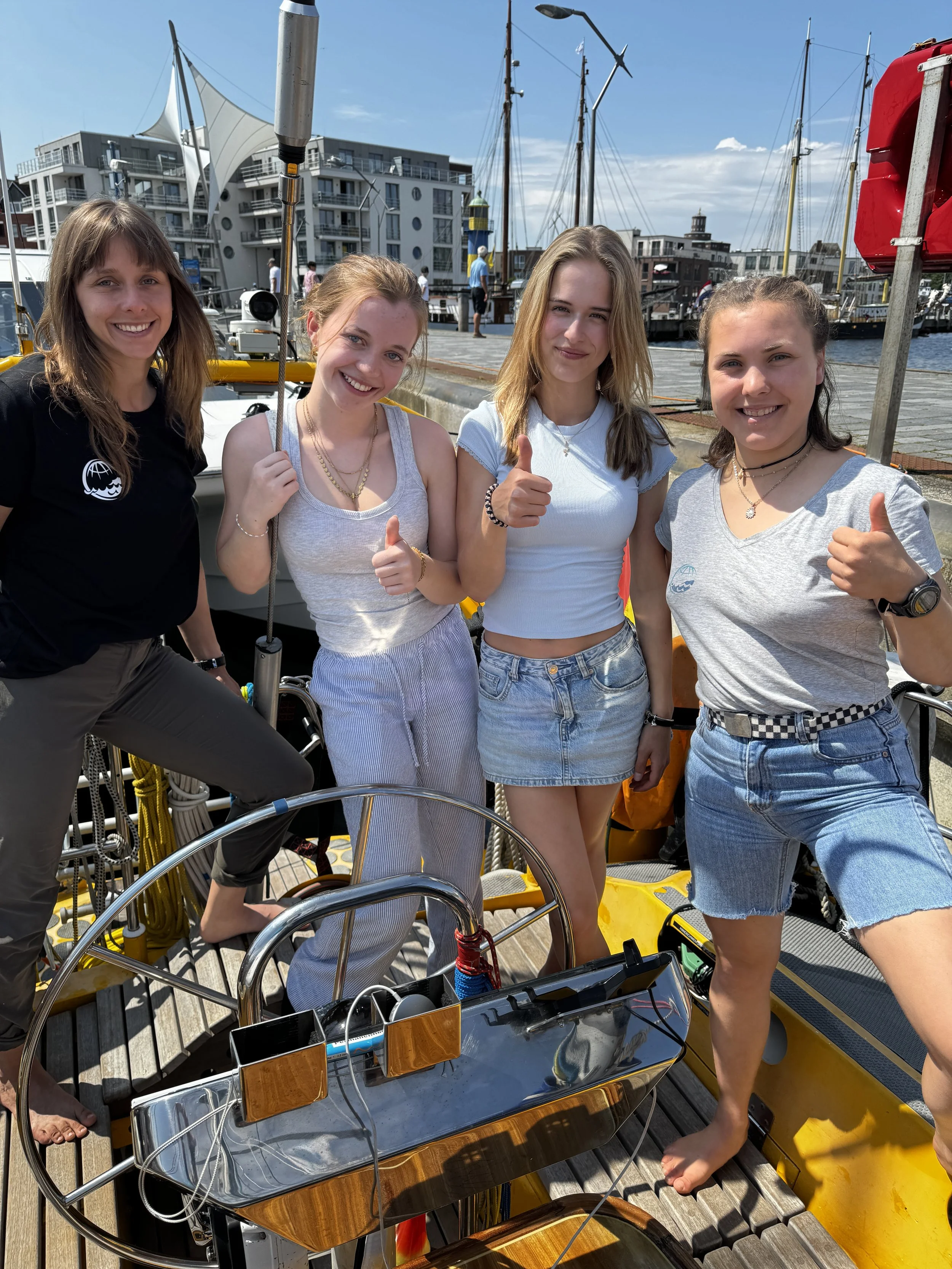
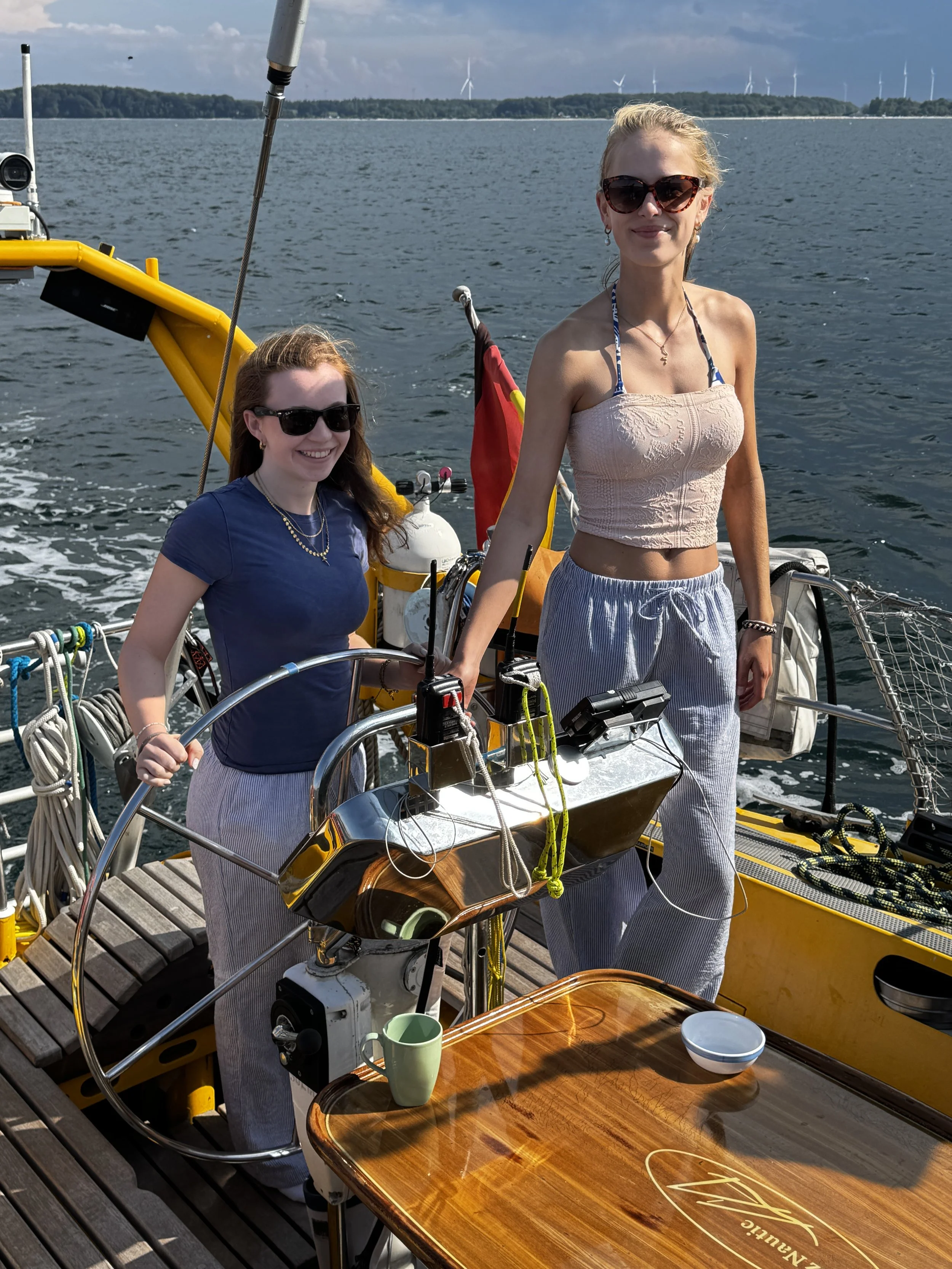
A research expedition by the ‘Gymnasium Lerchenfeld’ aboard the ALDEBARAN has shown that resilient ecosystems still exist even in those areas of the Baltic Sea known as ‘dead zones’.
Eckernförde, July 2026. Are the oxygen-depleted areas of the Baltic Sea known as ‘dead zones’ really devoid of life? This was the question explored by pupils Sienna Schaber and Jordis Klüver from ‘Gymnasium Lerchenfeld’ (Hamburg) as part of the 23rd Research at Sea competition organised by the German Ocean Foundation. During a five-day research expedition in Eckernförde Bay, they investigated this pressing environmental issue together with their scientific mentors, Lisa Schüler and Clara Taetz.
On board the research and media vessel ALDEBARAN, the team collected sediment samples from marine areas with varying levels of oxygen. Using a bottom grab, a total of eight samples were collected, sieved on board and subjected to preliminary scientific analysis. The focus was on mussels, worms, crustaceans and other benthic organisms, the presence of which allows conclusions to be drawn about the ecological condition of the seabed.
The results paint a clear picture: significantly fewer organisms were found in oxygen-deprived areas than in zones with a good supply of oxygen. Nevertheless, individual organisms were still detected even in areas that, according to the scientific definition, are classified as ‘dead zones’. The samples are now being further analysed at a specialist laboratory in Rostock.
“Our findings show that whilst the term ‘dead zone’ describes the dramatic state of these habitats, isolated forms of life can still exist there. At the same time, it becomes clear just how severely oxygen depletion is already affecting biodiversity in the Baltic Sea,” the team of school pupils summarises their initial findings.
For the two pupils, the expedition was far more than just a school project. They were particularly impressed by life on board a research vessel, the close collaboration with the scientists, and the opportunity to tackle scientific questions themselves under real-world conditions at sea.
“Our oceans determine our climate, biodiversity, food supply and, ultimately, our future. That is why it is so important to inspire young people to take an interest in science from an early age and to give them the opportunity to seek their own answers to the major environmental questions of our time,” says Frank Schweikert, Director of the German Ocean Foundation.
Through their research project, the two pupils from Hamburg are helping to improve our understanding of the effects of oxygen depletion, eutrophication and climate change on the Baltic Sea, whilst also demonstrating how young people can already play an active role today in researching and protecting marine ecosystems.