
Invisible greenhouse gas beneath the water’s surface: pupils from the Louisenlund Foundation discover areas with virtually no oxygen in Eckernförde Bay – indications of possible methane formation
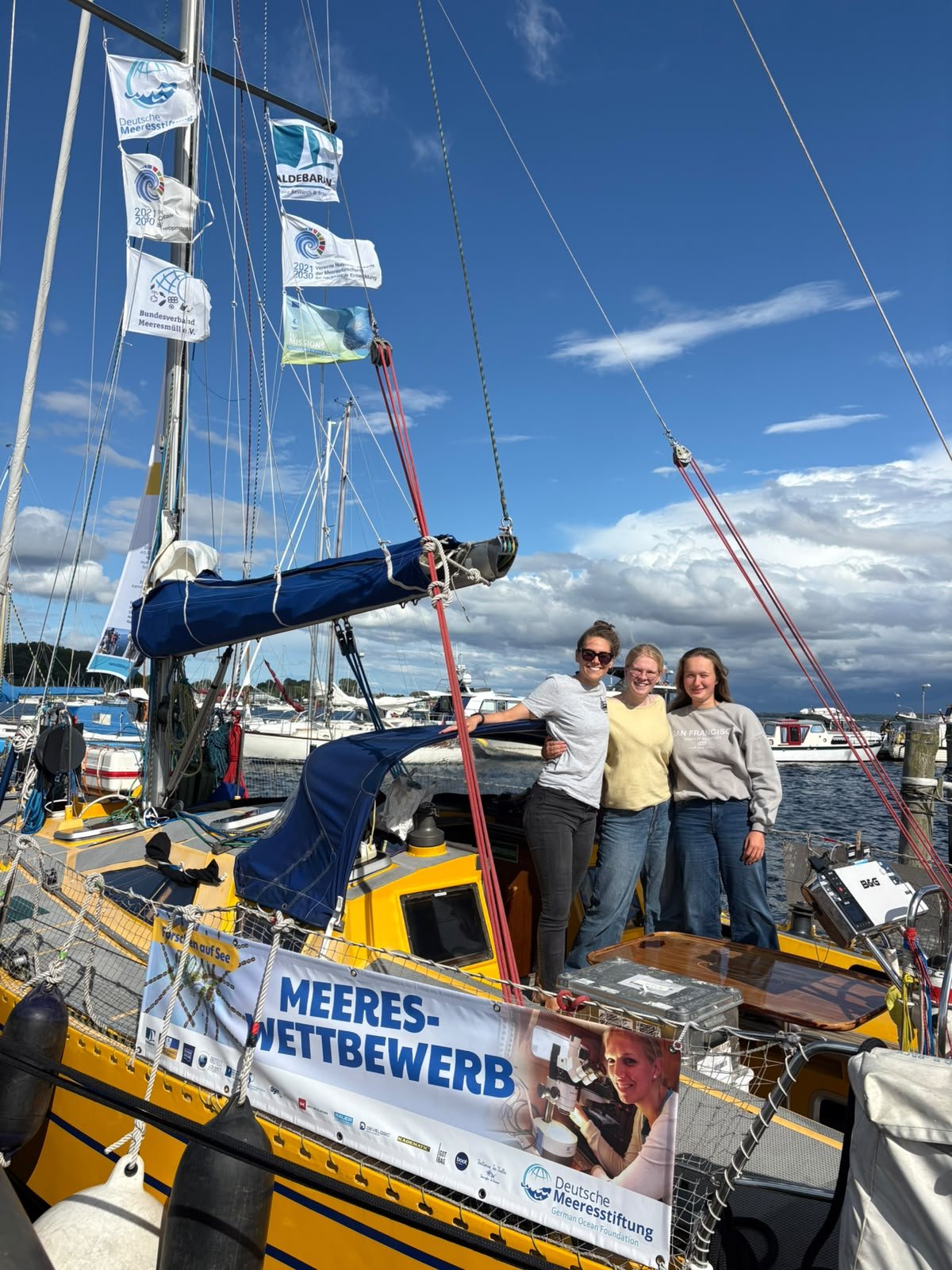
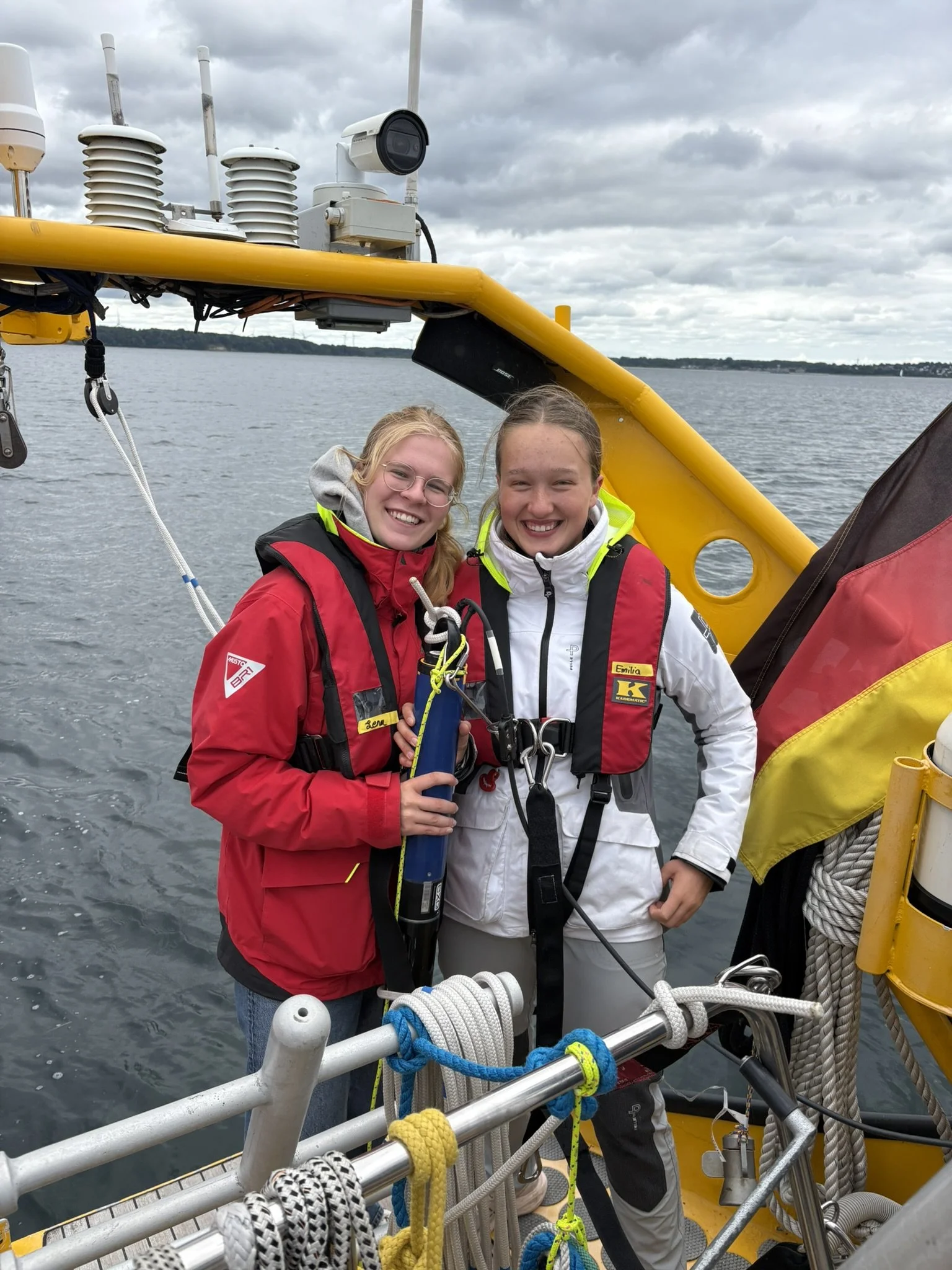
Kiel, 22 July 2026 – How is methane, a highly potent greenhouse gas, produced in the Baltic Sea, and what role does the increasing lack of oxygen play in this process? Pupils Lena Dreeßen and Emilia Schreiber from the Louisenlund Foundation investigated this question as part of the nationwide Research at Sea competition aboard the research and media vessel ALDEBARAN. During their four-day research expedition in Eckernförde Bay, they worked alongside scientists to collect valuable data on water quality and conditions on the seabed.
The project focused on investigating methane, a greenhouse gas that has received little attention to date. Methane is produced by microbial processes in oxygen-deprived environments and, in the first few decades after its release, has a significantly greater impact on the climate than carbon dioxide. At the same time, it plays an important role in the global carbon cycle and is increasingly becoming the focus of climate research.
At a total of ten measuring stations, the pupils carried out three measurements each at different depths. Using a state-of-the-art multi-probe, they generated high-resolution profiles of the entire water column, recording numerous environmental parameters, including oxygen content, temperature, salinity and other hydrographic parameters. The preliminary analysis showed that areas with virtually no oxygen had formed at four measuring stations. Under such conditions, there is a high probability that microbiological processes leading to the formation of methane will commence.
The measurements were supplemented by underwater images of the seabed. The camera images reveal large quantities of suspended matter settling on the seabed, where it is broken down by microorganisms. This biological decomposition consumes the oxygen dissolved in the water. Once this oxygen has been almost completely consumed, conditions arise under which methane can form. The water samples collected during the expedition are now being further analysed in the laboratory to establish a correlation between the measured oxygen levels and the actual methane concentrations.
The project was supervised by Dr Mona Norbisrath from GEOMAR Helmholtz Centre for Ocean Research Kiel, who provided scientific guidance to the pupils. On board, they were supported by science coaches Claire Herzog and Karen Ritter, under the leadership of skipper and expedition leader Frank Schweikert.
The weather conditions also contributed to the expedition’s success. Calm weather allowed for extensive measurement programmes and high-quality underwater imagery at all planned stations. This enabled the collection of datasets that provide detailed insight into the stratification of the water column and the processes taking place on the seabed of Eckernförde Bay.
“Methane is one of the most significant, yet least visible, greenhouse gases on our planet. The fact that pupils can use state-of-the-art environmental measurement technology to investigate for themselves the conditions under which this gas might form in the Baltic Sea impressively demonstrates just how exciting and relevant marine research is for climate protection. At the same time, they are making a valuable contribution to a better understanding of the hidden processes beneath the water’s surface,” says Frank Schweikert, director of the German Ocean Foundation and initiator of the Research at Sea competition.