
Young researchers from Stuttgart are investigating invisible oxygen-producing organisms in the Baltic Sea
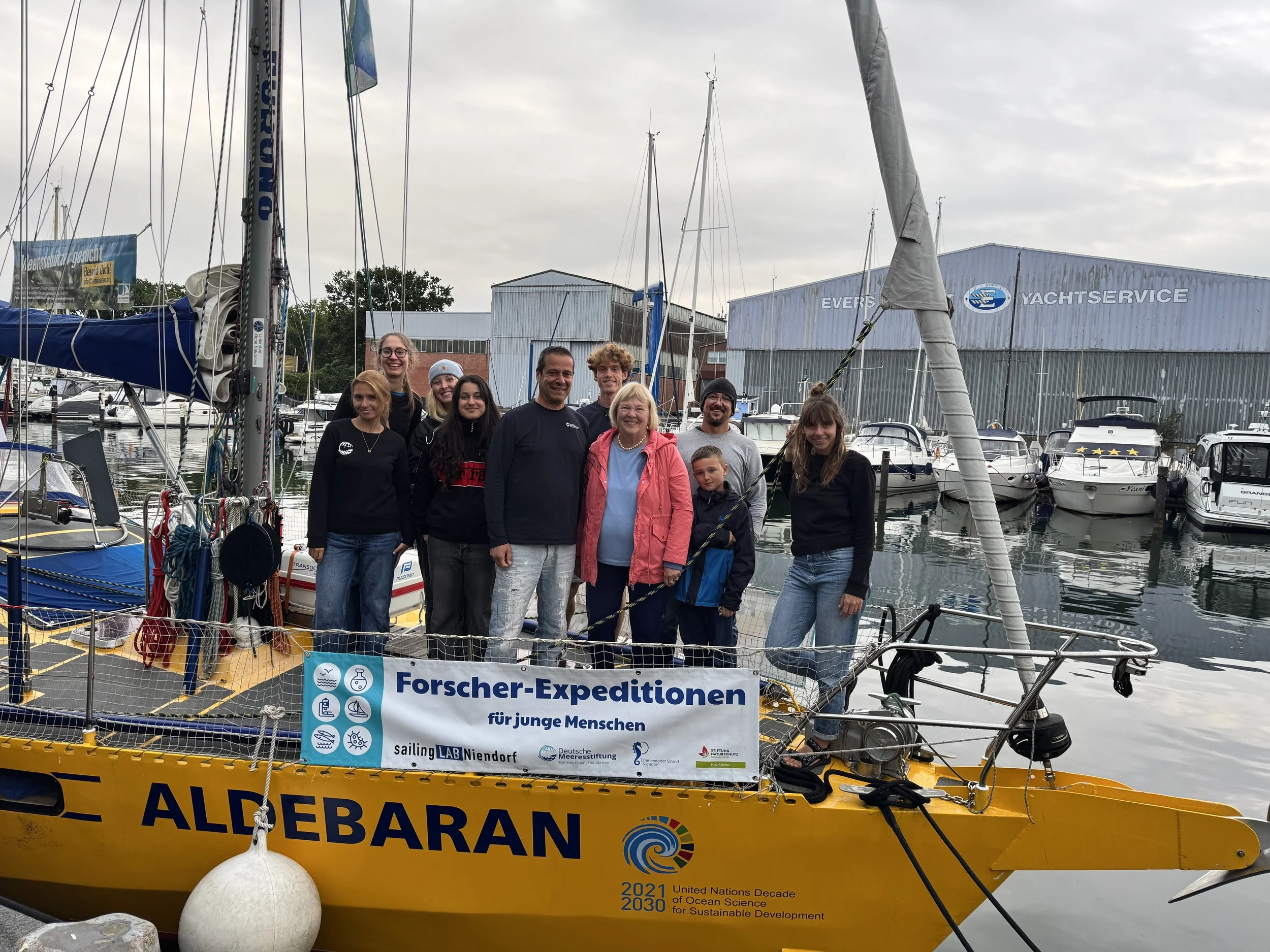
On board the research vessel ALDEBARAN, pupils are investigating the hitherto little-studied role of biofilms in oxygen production – the Baltic Sea serves as an important ‘model sea’ for the future of our oceans.
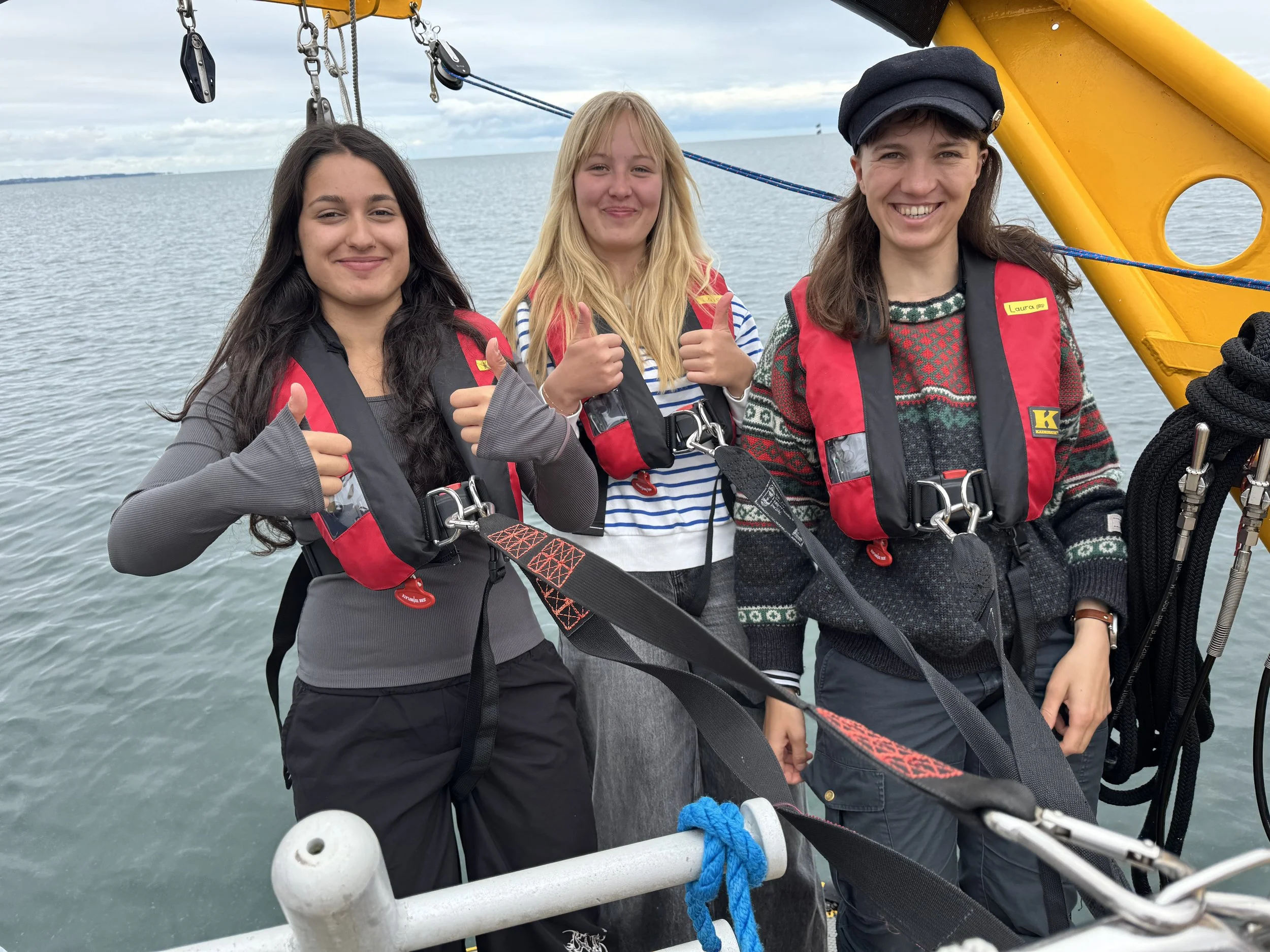
How much oxygen do microscopic algae produce that live on rocks, buoys, jetties and other solid surfaces in the Baltic Sea? Luise Wintergerst and Hanna Mohammad from the Königin-Katharina-Stift-Gymnasium in Stuttgart investigated this previously little-studied question as part of the Research at Sea competition. During a week-long expedition on the research and media vessel ALDEBARAN in Lübeck Bay, they examined biofilms at various locations and were able to detect oxygen-producing microalgae within them. The project was supervised by their scientific mentor, Laura Pareigis from the University of Bremen. The research also demonstrates how young people can take responsibility for the oceans through their own research and use their scientific expertise to strengthen their voice in support of marine conservation.
A world of oxygen production that has received little attention to date
When it comes to oxygen production in the sea, scientific attention has focused primarily on phytoplankton – microscopic algae that float freely in the water and produce oxygen through photosynthesis. However, microalgae do not only live freely in the water. Together with bacteria and other microorganisms, they colonise almost any suitable solid surface, forming what are known as biofilms. Just how much these biofilms contribute to oxygen production, and to what extent their performance depends on location, depth, light, current or the nature of the colonised surface, has so far been relatively little studied.
This is precisely where the pupils’ project, ‘How surface structure influences biofilm formation and oxygen content in Baltic Sea water’, came in. From 16 to 21 August 2026, Luise Wintergerst and Hanna Mohammad studied biofilms in the Bay of Lübeck. The scientific design, sampling and analysis were supervised and led by Laura Pareigis from the University of Bremen.
Biofilms at different locations and water depths
In order to capture as wide a range of environmental conditions as possible, the research team took samples from two swimming buoys and two further locations along the coast. Biofilms from different water depths were examined. The schoolgirls determined the oxygen content in the water immediately surrounding the biofilms and combined these analyses with measurements of chlorophyll a, a key photosynthetic pigment. Using a fluorescence microscope, they were able to visualise the photosynthetically active microalgae within the biofilms. The investigations suggest that the microalgae living in biofilms actively contribute to local oxygen production and that this contribution can vary depending on the location and environmental conditions. This brings into focus a habitat that has so far received significantly less attention than phytoplankton floating freely in the water.
Through their project, Luise Wintergerst and Hanna Mohammad are revealing a world that normally remains hidden. At the same time, they exemplify the potential that arises when young people are given the opportunity to conduct research at sea themselves, discover scientific connections and, as a result, develop their own stance on the protection of our oceans.